


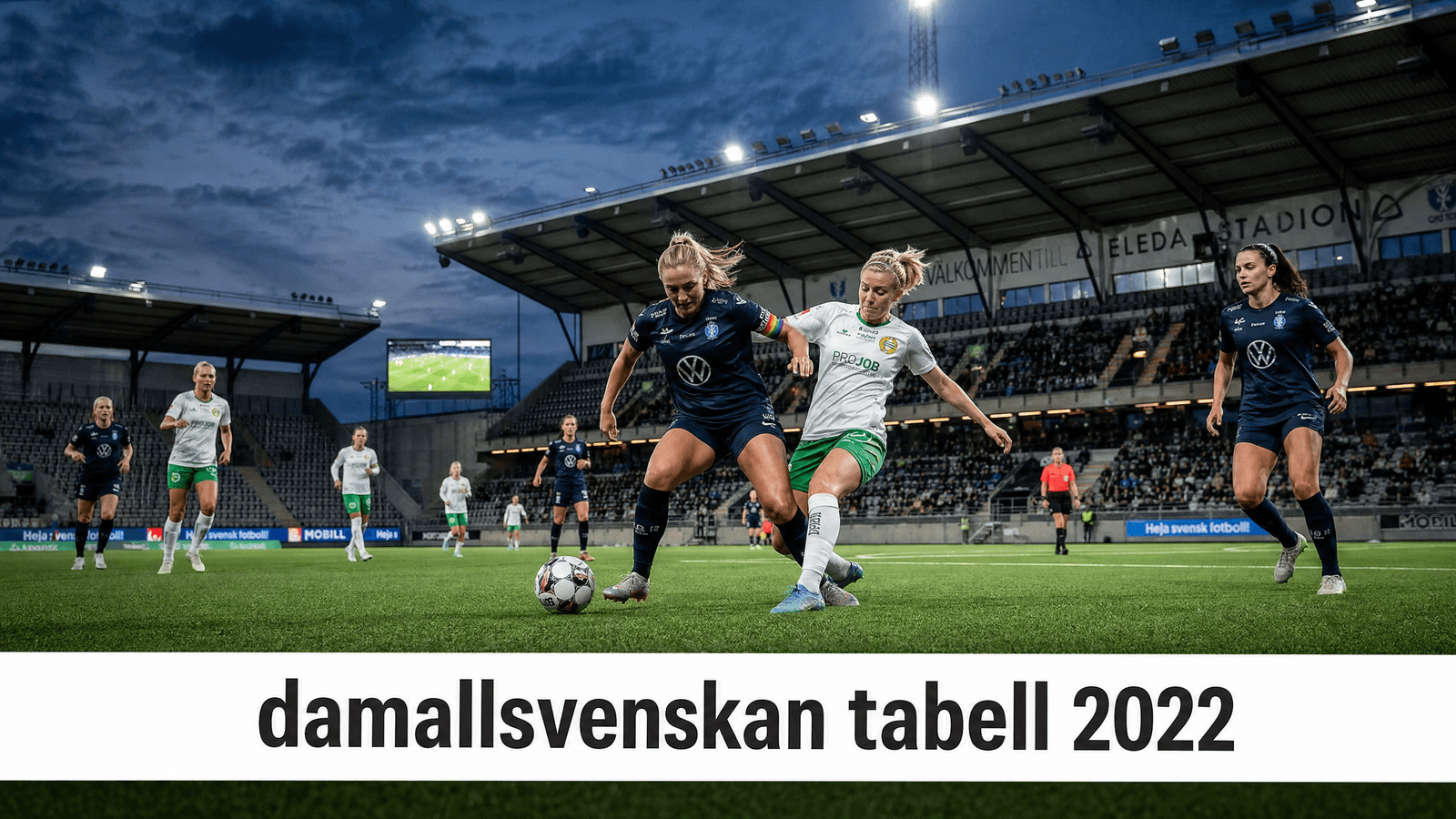
Swedish women's football is in a golden age, with interest, professionalisation, and the sporting level constantly reaching new heights. When we look back at the dramatic 2022 season, we see a milestone that changed the league's structure and cemented its status as one of Europe's most competitive leagues. For those who wish to analyse the power balance during this historic year, a detailed Damallsvenskan table a perfect overview of the points distribution, goal difference, and final standings that crowned FC Rosengård Swedish champions. By studying the table, one quickly understands how fine margins decided both the title race and the gruelling relegation battle.
The 2022 season was historic in many ways, not least because the league expanded from 12 to 14 teams. This meant that the fixture list was extended to a total of 26 rounds, which placed entirely new demands on squad depth, players' physical condition, and clubs' long-term planning. The three newcomers for the year – Umeå IK, IFK Kalmar, and IF Brommapojkarna – stepped into an environment with a higher tempo and more intense scrutiny than ever before.